10. Language Barrier
I had certain expectations. I was told that people in Japan are surprisingly fluent in English. I was told that you did not need to know Japanese to get around. I was told I would be fine.
I was wrong.
Truthfully, I have no right to complain about the language barrier as it wrong to expect the Japanese to be in fluent in English. It is their de facto second language, much like Spanish is the second language of the United States. Yet, most Americans barely speak any Spanish. It is a similar deal in Japan. Still, with the expectations I had after numerous people (including a businessman on the flight to Tokyo) told me that the Japanese are "surprisingly" good at English, I have some reason to at least be a little angry, or at least disappointed.
With lofty expectations completely destroyed, I was forced to make due and the very first few weeks were frustrating. Very few signs are in English (Romanji doesn't count), very few Japanese are fluent (though a few are which becomes a pleasant surprise) and the overwhelming nature of Tokyo does not make it any easier to get around. In other words, the language barrier does not make Tokyo particularly "tourist friendly" which only makes everything that much more frustrating. Sure, with time one can adjust and accommodate and work around the language barrier, but it does make living in a foreign country any more enjoyable.
At least you can complain about everything and not worry people understanding you.
9. Japanese Television
They say that Japan is responsible for producing 78% of the world's weird shit since 1952 and a couple of google searches later, you would see all the weird stuff and think "That must be on TV. I want to watch Japanese TV!" I have been there. I would know. Well sadly, Japanese television is terribly disappointing.

Not enough of this.
Don't get me wrong. They are some strange stuff on TV; most popular being the wacky Japanese game shows. For the most part, these do not disappoint and have a wide range of "competition" including Karaoke contests, and obstacle courses.Some of these shows pit comedians against together in strange contests, but at that point you need to understand Japanese to provide much needed context. In other words, it is just fucking beyond comprehension.
However, this prime time program is rarely on. Most of the time when I put on the TV in my room, I was treated to Japanese news or Japanese talk shows. This makes a bulk of the programming at any given time and is surprisingly tame. That or maybe you got a Japanese dubbed American show like iCarly. The strangest thing I saw on the TV when these shows were on was what appeared to be the Japanese equivalent of Oprah, but instead of a charitable middle aged black woman, it was a fat cross dressing man who was also be the Japanese version of Jabba the Hut.

Too much of this.
Needless to say, Japanese TV is not everything it is cracked to be. Don't let the Internet fool you. It is a lot like American TV: plenty of channels, yet still nothing to watch.
8. The Dangerous Roads
It is pretty much common knowledge that nobody knows how to drive. It is true for the United States and it is true for Japan. But we as humans have found ways to work around our shared inability to get from Point A to Point B. There are rules, both spoken and unspoken, that allow pedestrians and motorists to co-exist without killing each other in terrible accidents. Well, Japan failed to get the memo.
At least it feels that way sometimes. People in Japan, both motorists and pedestrians alike are erratic in their behavior when it comes to getting around, especially when commuting. Sometimes the Japanese are amicable. Passive even. Other times, it appears they are ready to tackle you down like Ray Lewis in the SuperBowl. This behavior is entirely dependent on the person and the time of day.

Looks so safe. Just imagine cars and buses go through this small space.
I can't really speak as a fellow motorist, seeing how I was car-less the entire semester, but as a pedestrian I felt at times taking a chance with my life any time I left the my room. Drivers are either overly cautious or overly aggressive, though this seems to be highly dependent on the vehicle they are driving. Being run over is a legitimate fear because of the erratic driving habits, which is further propagated by the crowded streets of Tokyo. The streets are incredibly narrow, so barely a car can fit through. The lack of real sidewalks doesn't help matters, forcing to huddle on the small "shoulder" on the side of the road that is maybe a foot wide. In fact, the lack of sidewalks are the real problem as this little space is all you have to dodge pedestrians, cyclists AND motorists all that same time. No wonder everyone in Japan is a ninja. They train every day during their commute.
7. Lack of variety
This is not a slap in the face of Japanese culture. I love the Japanese as much as the next guy, hence why I went there. However, the Japanese almost appear to live in a bubble and makes the country feel truly "foreign" to outsiders, making it impossible to blend in. As they live in their bubble, foreign cultures rarely become commonplace. If they do, the Japanese add their spin on it anyway
The lack of variety in culture is hardly a problem really as visiting another country involves immersing yourself in everything that country has to offer. But there are times when you will feel homesick. There are times when you want to feel "American." And what's more American than a burger? Or a steak? Finding those heavenly cuisines is nigh impossible in Japan. Or at least very expensive. There are several places to find Italian, French or American food, but they are either overpriced, or have had added their own Japanese flair to the dish making in hardly genuine. And yes franchises like Starbucks or McDonald's are there, but its not the same. Actually, it may be better but that isn't the point. In Japan, you will be eating Japanese food. Better get used to it.
At the same time, they are hardly any districts dedicated to celebrating other cultures. No "America Town" or "Little Italy." So it is pretty much Japan everywhere all the time. And don't bring up Yokohaman's "China Town." That doesn't count. Everyone has a China Town.
6. Everything is Small
As a previous blog post had said, everything in Japan is small. The streets. The cars. The rooms. The portions of food. The people! I wish I was exaggerating. Okay, to an extent I am. But the fact of the matter is, things in Japan are small and it can be frustrating to a certain extent. Streets are narrow and remind me of alleyways in New York City. And if Hollywood has taught me anything, cars are not meant to go through them.
Jokes aside, the narrow streets, even with the smaller cars are perilous and cramped. People are forced to squeeze into small places, in their commute and in their homes. This is does not bold well with people like me which happen to be a broader build than others. Big portions of food are almost non existent, which probably explains why the people are so small to begin with. On a serious note, it take a month for me to adjust to intake less food every day because simply put the Japanese don't eat the ridiculous amounts of food that Americans do.
Adjusting to the smaller nature of everything is nigh impossible and is not necessarily a good thing. Bigger streets, especially local ones are safer. Bigger buses to fit people make sense. Bigger cars to carry more supplies is sometimes a necessity. Bigger houses to make people more comfortable might make everyone feel less cramped. Bigger portions for meals…okay I just like eating. The fact is with all the small things that exist in the country, it is like the Japanese are purposely shrinking things because they like cute things a bit too much. Well, sorry Japan. Bigger is sometimes better.
5. The Novelty of Space
Originally I was going to bundle this in with number 6, but I felt that this problem was a big enough issue to warrant its own little rant. Space, whether living or personal, is a novelty. It's rare, impossible to find and more often than not, you got to pay for it when you do. Yes, my friends, you got to pay for space.
This is primarily due to the fact that are so many people have crowded into Tokyo that space indadvertedly became progressively more difficult to come by. The rate at which Tokyo expands is slower than the rate the population increases, so people swallow up the space as soon as they come by it. Living space shrunk to the point that a good sized apartment is probably a bit bigger than the room I lived in. I know this because other Japanese people complimented my dorm room. Talk about a tight fit.
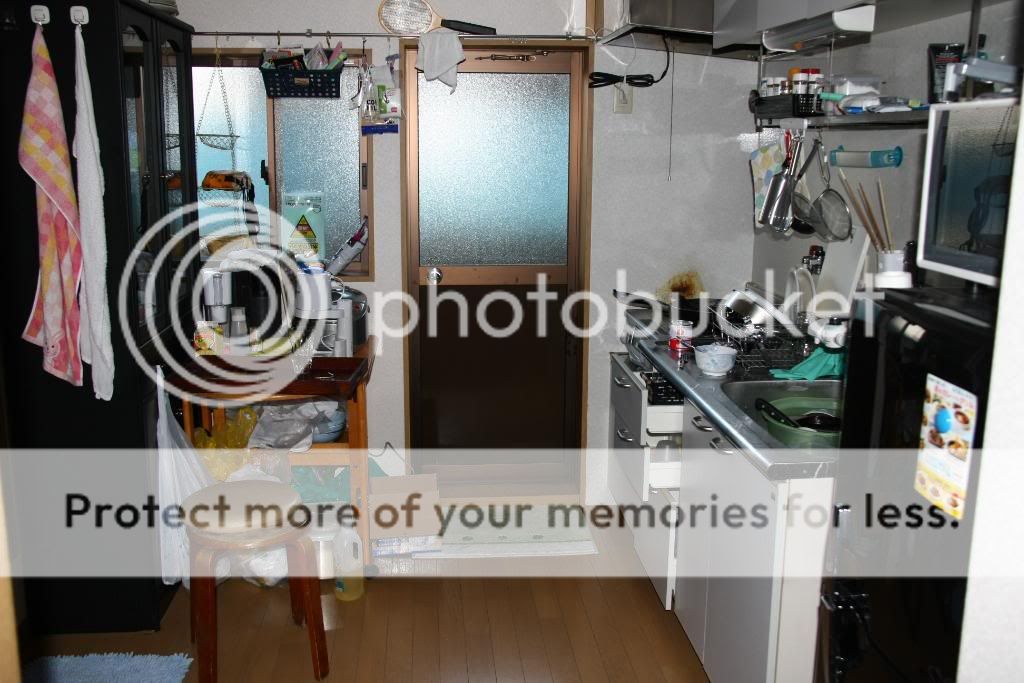
So much storage space! Just start using your floor and you are fine.
Space has become rare on your typical commute as well, if only because thousands of people cram into planes, trains and automobiles. Navigating a public building or street is an exercise in patience. In general, I am simply surprised claustrophobia is not a more common problem.
When you finally do find space in the city, store owners at restaurants slap you with a seating charge. These charge you for occupying you the space, while you continue to spend money purchasing their goods and services. Well, gee thanks for making me feel oh so welcome.
With little space to call your own, you will feel as if privacy, comfort and room are the real American dream, not all the freedoms that with being in 'Merica. It is a luxury that I have come to expect wherever I go, so I hate when I don't have my own little private retreat.
4. The Social Customs
The Japanese have their own little way of doing things, and in some cases we all know a few of the customs that come with that. Bowing is a good example of a "Japanese" thing. But no matter how much we think we understand the Japanese, we don't. And never will.
The problem really is that the Japanese read a lot into "how" one does things. How they speak, how they carry themselves, how they "bow" or anything really is open to interpretation. This is not a whole different than anyone else, but it extends a bit father than that. They are about a 100 different ways to say "hello" and it is different for how you say it a family member, a youth, an elder, co-worker, friend, boss, loved one and random stranger. One's body language greatly affects first impressions as well, hence why I always go back to bowing. Bowing is a big deal and the Japanese do it a lot. How deep your bow is entirely dependent on the situation and how much respect you are giving the other person. Shallow bows are unacceptable to offer a businessman of higher stature, but you can probably get away with it when you offer to someone who works at 711.

Here's a crash course in bowing. You're welcome.
However, no one tells you this and therefore you will inevitably look like a complete idiot for some time until you either stop caring and assume the role of the ignorant foreigner or you finally catch on to subtleties of Japanese social interaction. Which is not likely. The Japanese have a tendency to remain very reserved, almost shy, making speaking with them somewhat difficult at least at first. Some will open up. Others will not. Though I have found that larger social gatherings (often involving alcohol) usually breaks the ice better than most. Regardless of how you adjust to the Japanese social customs, it is a long, frustrating road until you finally figure out how to carry yourself in Japan. Prepare to look like a fool for some time.
3. The Price for Everything
There is no clever way to say this: Japan is an expensive place to live in. Everything from food and supplies to gifts and luxuries cost a fair amount of money. And we can agree there is nothing worse than watching your money slip through fingers.
Tokyo, generally speaking, has a high standard of living and area is truly comparable to that of New York City. Higher prices are part of living in the city, but it truly feels that everything is just more expensive than you would expect. And you have to pay for everything. Food, particularly meat, is very expensive. It doesn't matter if it is from a supermarket or at restaurant, you will be paying top dollar to consume at any amount of meat. It is the revenge of vegetarians I tell you! Only fish is reasonably priced, but even then the prices are not much lower than that of a lower quality piece of chicken. Going out to a restaurant to get a meal is almost the same price as preparing a meal from scratch. When the difference is that negligible, you know food is getting expensive. Even snacking around or buying pre made 711 meals is not much cheaper than "going out" making frugal living not an option on this multiple choice exam.
Travel costs more than you would expect as well. Taxi prices are about as ridiculous as in the United States, possibly more so and the train and bus prices slowly eats away at bank account. It adds up quickly and before you know it, you have to recharge your card because you have been traveling a bit too much.
But perhaps the most ridiculous cost is how high the rent can be. While I personally did not have to face this challenge, the value of real estate in Japan is very high. This drives up the value of rent, which in turn makes Japan an even more expensive place to live.

It is important to note that many of these problems only exist in the urban areas, but seeing how the countryside is dry of any real reason to live there, these have become viable issues to complain about.
2. "Tokyo Look"
Ever feel like you are being watched? That someone is giving you a dirty look? Well, don't worry because in Japan that is completely normal, especially in Tokyo. Japan is a homogenous country, which its population almost entirely Japanese. Foreigners stick out and by nature are novel (almost as novel as space).
"Tokyo Look" is a phenomenon I discovered that describes the behavior of the Japanese that do not share the endearing fascination with outsiders than some do. They do this with a simple "look" at foreigners. This is not necessarily a dirty look, but more of a watchful glance. They observe foreigners often with curiosity, but it quickly can turn to disapproval. Simply put, the Japanese do not love foreigners all the time especially if they affect their daily lives. Americans, for example, do not fully understand the social customs of the Japanese and are, to be put bluntly, are loud. As a result, some Japanese grow uncomfortable in the presence of foreigners.
In response, the Japanese accommodate and ironically in turn make the foreigners uncomfortable. This is demonstrated by the unspoken "one seat rule." In public spaces, Japanese people will give foreigners a one seat buffer between them and the respective foreigner. This most often occurs during commutes on trains and buses and the rule will not be broken unless it is incredibly crowded. Additionally, the Japanese rarely socialize with outsiders if they can help instead preferring staying in their own little worlds playing with their iPods or iPhones.

Bad picture, but great example of the one seat rule.
The real problem with "Tokyo Look" is it feels rather uninviting, creating a mutual level of separation. The Japanese are sometimes uncomfortable with the ideas of foreigners lurking around and the foreigners in turn are uncomfortable with the behavior of their host population. Luckily enough, other cities tend to be more inviting, such as Osaka or Kyoto and the younger generations are more curious than shy in their attitude towards outsiders. In due time, "Tokyo Look" will die out. Hopefully.
1. The Crowds
I never realized how much I hated crowds until I went to Japan. I live near New York City and am used to a ridiculous amount of people surrounding me on a daily basis. However, Japan, especially the cities, take "crowded" to a whole new level. The majority of the Japanese population lives in the urban core cities of Tokyo, Osaka and Nagoya, in which turns creates high population densities in a relatively small areas. When millions of people crowd into a city, you can imagine the crowds of people you have to deal with especially during peak hours of activity. It seemed there was never a quiet moment in Tokyo as trains or buses were always filled with the brim with people. It's frustrating and uncomfortable due to the point of being laughable.

Sadly, this is only a little crowded.
But the real problem with the crowds is that they are responsible for nearly everything on this list. The high prices, the lack of space, the dangerous roads and the small size of everything are all a result of the surging growth of these cities. The small sizes are needed to fight everything into the packed city. Small, crowded, dangerous are a natural side effect of high populations. Space is going to become rare and valuable with such high demand. High prices are just a result of the nature of cities due to the supply of higher paying jobs and higher standards of living. For no other reason for being the core problem, the crowds deserve to be at the top of this list.

No comments:
Post a Comment