Thursday, March 28, 2013

Fire Emblem Awakening Review


The Fire Emblem series remains to be one of the great, yet almost unknown, series exclusive to Nintendo. Despite its first game being released over 20 years ago, international audiences have only been exposed to the deep story driven tactics series for the past 10 years, with "Fire Emblem" being released on the GBA in late 2003. Since then the series has had sporadic, yet solid entries earning critical acclaim and earning admiration its dedicated hardcore audience. With the newest release, new fans can become part of this niche and hopefully be "awakened" to one of the greatest games released so far for Nintendo's 3DS.

Nintendo and Intelligent Systems have expertly crafted a gaming experience that can appeal to both veterans of the series and newcomers alike, introducing new ideas and concepts without sacrificing the pillars that this franchise has been built on. The core gameplay remains unchanged, which is no doubt a good thing. Divided into chapters or challenge, each "level" involves moving your units on a map to accomplish an objective. More often than not the goal is simply defeating your opponents and clearing the map, but it can include defeating the general, capturing a given location or surviving. While sounding simple enough, its often far from it. The AI is brilliant and punishing, and it requires patience and forward thinking from the player to advance without losing a unit. And in Fire Emblem, once a unit dies, they are gone forever (permitting you don't restart to avoid such a loss). There comes a certain feeling of accomplishment when a given strategy works, and makes the entire game very rewarding. 

This will look familiar to long time fans.

To deepen the gameplay, Intelligent Systems have introduced a host of new features. The most readily noticeable feature is the ability to pair units together. When units are paired together, bonuses are given to units in battle, along with chances to double team opponents or protect each other. Some units pair together better than others, which relates to the support system. Supports have been a staple of the series for some time, and has evolved into a vital part of the experience. The system has been slightly modified to allow for an unlimited number of conversations between units (formerly you were limited to about 5 conversations). Additionally, while these conversations not only serve to flesh out and develop the characters, it can lead to developing romantic relationships, which over time lead to the possibility of having kids which can later be recruited into the army you lead. Combine this with the returning (yet slightly altered) feature of changing classes of certain units and the return of branching classes. This allows gamers to play however style they want, effectively customizing their army to cater to their respective style, adding layers to the already deep game.

Fortunately, Intelligent Systems has made this very accessible to newcomers. They are multiple difficulty levels, ranging from Normal to "Lunatic" (Very Hard) with an additional unlockable difficulty level. Also for those intimidated by the prospect of permanently losing units, well, you can turn that off! Combined with a gradual, but informative tutorial system that eases players into the game, introducing new and returning concepts as the game progresses makes Fire Emblem easy to pick up and play without missing a beat. 

The game throws you right into the thick of the story. You essentially create (in which you can customize multiple aspects of) and control "the Avatar" also known as "My Unit." Your character suffers from amnesia, wakes up in the middle of a field where he/she meets Chrom. Chrom happens to be the Prince of the Kingdom of Ylisse. Ylisse gets involved in an expansive war and it is up to Chrom, the Avatar and their growing army to stop the war and save the world. In other words, this is the standard Fire Emblem fare. While the story is not exceptionally different from any other different from other entries, Awakening does experiment with the storytelling. In my experience, this is the first Fire Emblem to introduce choices that actual outcomes. Couple with this with the marriage system and the life/death system of your units I mentioned earlier and you feel that your decisions carry some weight with how the story unfolds. 

The strength of the story does not come from its rather conservative tale, but it comes from the characters. Because of the ability to have support conversations to build relationship amongst the characters, the gamer is treated to a great deal of expansion and development of the characters. Each character has distinguishable characteristics and personalities. Some are charming. Others are not. Many of the characters undergo a surprising amount of development, so it never feels as if the large cast is cumbersome or deters from the overarching plot. In fact, because of the outstanding development of the characters, you will inevitably find yourself growing attached to a select few which will make the pressing life/death situations you will come across in the core gameplay all the more stressing. 

Fire Emblem Awakening pushes the 3DS to its limits, producing a beautiful visual experience. The art style that brought characters to life that was lost in Fire Emblem: Shadow Dragon returns, finally bringing the charm and personality to characters in both the in-game art, sprites and character models. The art style has a distinct anime feel to it, that works brilliantly in the CG cutscenes. The cutscenes, easily the most impressive aspect of the presentation, are sadly few and far between. The 3D effect does little to enhance the experience as a whole, but it can add some little immersion by emphasizing weather effects on certain maps and make the battle sequences more dramatic. Regardless, I found myself playing with the 3D off more often than not. Fire Emblem boosts a great soundtrack to compliment the dynamic visuals. Some tracks are remade renditions of the classic themes (such as the menu theme). Others are original pieces that help set the mood or emphasize the gravity of the situation. From my perspective, it was more about the use of the themes than the actual composition of the piece. 

The cutscenes are very pretty.

With a long, engaging story and a great host of maps to play, there is little doubt that Fire Emblem Awakening will be sitting in your system for some time. With the promise of more DLC to continue the experience, coupled with a multiplayer system including StreetPass team construction and multiplayer battles, there is plenty of reason to pick up, play and never consider putting down Fire Emblem Awakening.

THE RUNDOWN.

Graphics: 9.5/10
Easily one of the best uses of the 3DS hardware so far. Great art design, fully animated battles and dynamic set pieces all fuel an immersive experience. The 3D does little to add to the experience, however.

Sound: 9/10
The music is amazing and its direction even better. Voice acting, when present, is great as well featuring some great casting choices.

Gameplay: 9.5/10
One of the deepest games on the market today. The strategy is satisfying and rewarding, the characters captivating and charming and the customization guarantees you will have an unique and fun experience. 

Value: 10/10
The game is long due to the sheer amount of maps and challenges present in the game. The main story takes a while in itself, but combined with the impressive amount of optional levels to, there is a lot of game to go around. Let's not even mention the DLC. 

Overall: 9.8

Thursday, March 14, 2013

Countdown!: The 10 Things I Hated About Japan

Welcome to Countdown!, where I count down things in entertaining lists. For the inaugural edition, I am counting the 10 things I hated about Japan.


10. Language Barrier
I had certain expectations. I was told that people in Japan are surprisingly fluent in English. I was told that you did not need to know Japanese to get around. I was told I would be fine.

I was wrong. 

Truthfully, I have no right to complain about the language barrier as it wrong to expect the Japanese to be in fluent in English. It is their de facto second language, much like Spanish is the second language of the United States. Yet, most Americans barely speak any Spanish. It is a similar deal in Japan. Still, with the expectations I had after numerous people (including a businessman on the flight to Tokyo) told me that the Japanese are "surprisingly" good at English, I have some reason to at least be a little angry, or at least disappointed. 

With lofty expectations completely destroyed, I was forced to make due and the very first few weeks were frustrating. Very few signs are in English (Romanji doesn't count), very few Japanese are fluent (though a few are which becomes a pleasant surprise) and the overwhelming nature of Tokyo does not make it any easier to get around. In other words, the language barrier does not make Tokyo particularly "tourist friendly" which only makes everything that much more frustrating. Sure, with time one can adjust and accommodate and work around the language barrier, but it does make living in a foreign country any more enjoyable.  

At least you can complain about everything and not worry people understanding you. 

9. Japanese Television
They say that Japan is responsible for producing 78% of the world's weird shit since 1952 and a couple of google searches later, you would see all the weird stuff and think "That must be on TV. I want to watch Japanese TV!" I have been there. I would know. Well sadly, Japanese television is terribly disappointing. 

Not enough of this.


Don't get me wrong. They are some strange stuff on TV; most popular being the wacky Japanese game shows. For the most part, these do not disappoint and have a wide range of "competition" including Karaoke contests, and obstacle courses.Some of these shows pit comedians against together in strange contests, but at that point you need to understand Japanese to provide much needed context. In other words, it is just fucking beyond comprehension. 

However, this prime time program is rarely on. Most of the time when I put on the TV in my room, I was treated to Japanese news or Japanese talk shows. This makes a bulk of the programming at any given time and is surprisingly tame. That or maybe you got a Japanese dubbed American show like iCarly. The strangest thing I saw on the TV when these shows were on was what appeared to be the Japanese equivalent of Oprah, but instead of a charitable middle aged black woman, it was a fat cross dressing man who was also be the Japanese version of Jabba the Hut. 

Too much of this.


Needless to say, Japanese TV is not everything it is cracked to be. Don't let the Internet fool you. It is a lot like American TV: plenty of channels, yet still nothing to watch.

8. The Dangerous Roads
It is pretty much common knowledge that nobody knows how to drive. It is true for the United States and it is true for Japan. But we as humans have found ways to work around our shared inability to get from Point A to Point B. There are rules, both spoken and unspoken, that allow pedestrians and motorists to co-exist without killing each other in terrible accidents. Well, Japan failed to get the memo.

At least it feels that way sometimes. People in Japan, both motorists and pedestrians alike are erratic in their behavior when it comes to getting around, especially when commuting. Sometimes the Japanese are amicable. Passive even. Other times, it appears they are ready to tackle you down like Ray Lewis in the SuperBowl. This behavior is entirely dependent on the person and the time of day. 

Looks so safe. Just imagine cars and buses go through this small space.


I can't really speak as a fellow motorist, seeing how I was car-less the entire semester, but as a pedestrian I felt at times taking a chance with my life any time I left the my room. Drivers are either overly cautious or overly aggressive, though this seems to be highly dependent on the vehicle they are driving. Being run over is a legitimate fear because of the erratic driving habits, which is further propagated by the crowded streets of Tokyo. The streets are incredibly narrow, so barely a car can fit through. The lack of real sidewalks doesn't help matters, forcing to huddle on the small "shoulder" on the side of the road that is maybe a foot wide. In fact, the lack of sidewalks are the real problem as this little space is all you have to dodge pedestrians, cyclists AND motorists all that same time. No wonder everyone in Japan is a ninja. They train every day during their commute. 

7. Lack of variety
This is not a slap in the face of Japanese culture. I love the Japanese as much as the next guy, hence why I went there. However, the Japanese almost appear to live in a bubble and makes the country feel truly "foreign" to outsiders, making it impossible to blend in. As they live in their bubble, foreign cultures rarely become commonplace. If they do, the Japanese add their spin on it anyway

The lack of variety in culture is hardly a problem really as visiting another country involves immersing yourself in everything that country has to offer. But there are times when you will feel homesick. There are times when you want to feel "American." And what's more American than a burger? Or a steak? Finding those heavenly cuisines is nigh impossible in Japan. Or at least very expensive. There are several places to find Italian, French or American food, but they are either overpriced, or have had added their own Japanese flair to the dish making in hardly genuine. And yes franchises like Starbucks or McDonald's are there, but its not the same. Actually, it may be better but that isn't the point. In Japan, you will be eating Japanese food. Better get used to it. 

At the same time, they are hardly any districts dedicated to celebrating other cultures. No "America Town" or "Little Italy." So it is pretty much Japan everywhere all the time. And don't bring up Yokohaman's "China Town." That doesn't count. Everyone has a China Town. 

6. Everything is Small
As a previous blog post had said, everything in Japan is small. The streets. The cars. The rooms. The portions of food. The people! I wish I was exaggerating. Okay, to an extent I am. But the fact of the matter is, things in Japan are small and it can be frustrating to a certain extent. Streets are narrow and remind me of alleyways in New York City. And if Hollywood has taught me anything, cars are not meant to go through them. 

Jokes aside, the narrow streets, even with the smaller cars are perilous and cramped. People are forced to squeeze into small places, in their commute and in their homes. This is does not bold well with people like me which happen to be a broader build than others. Big portions of food are almost non existent, which probably explains why the people are so small to begin with. On a serious note, it take a month for me to adjust to intake less food every day because simply put the Japanese don't eat the ridiculous amounts of food that Americans do.

Adjusting to the smaller nature of everything is nigh impossible and is not necessarily a good thing. Bigger streets, especially local ones are safer. Bigger buses to fit people make sense. Bigger cars to carry more supplies is sometimes a necessity. Bigger houses to make people more comfortable might make everyone feel less cramped. Bigger portions for meals…okay I just like eating. The fact is with all the small things that exist in the country, it is like the Japanese are purposely shrinking things because they like cute things a bit too much. Well, sorry Japan. Bigger is sometimes better. 

5. The Novelty of Space
Originally I was going to bundle this in with number 6, but I felt that this problem was a big enough issue to warrant its own little rant. Space, whether living or personal, is a novelty. It's rare, impossible to find and more often than not, you got to pay for it when you do. Yes, my friends, you got to pay for space. 

This is primarily due to the fact that are so many people have crowded into Tokyo that space indadvertedly became progressively more difficult to come by. The rate at which Tokyo expands is slower than the rate the population increases, so people swallow up the space as soon as they come by it. Living space shrunk to the point that a good sized apartment is probably a bit bigger than the room I lived in. I know this because other Japanese people complimented my dorm room. Talk about a tight fit.

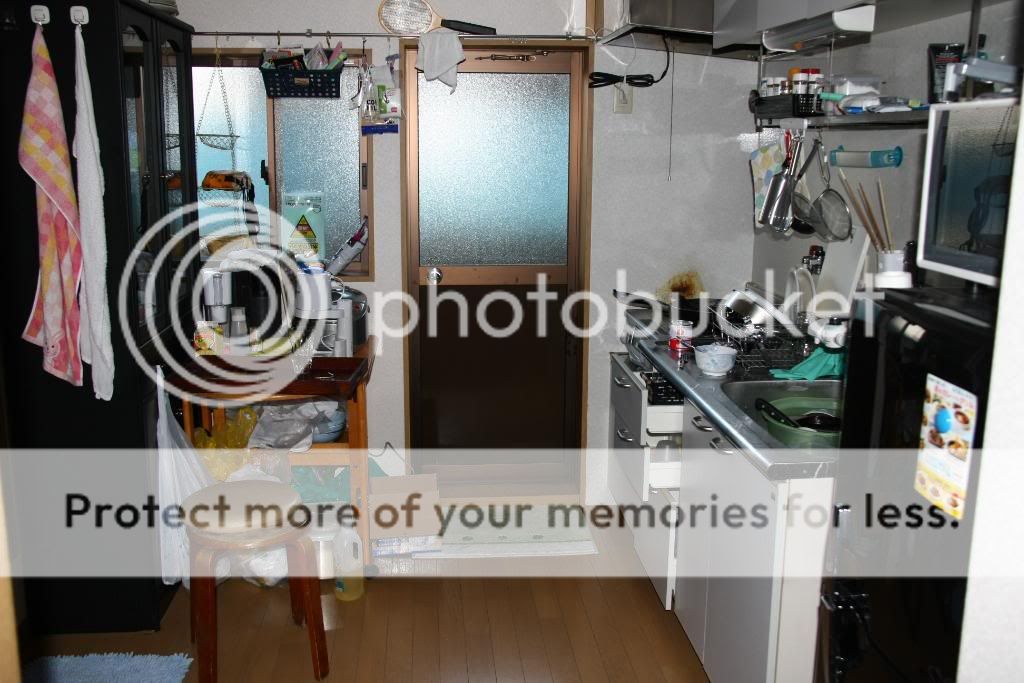
So much storage space! Just start using your floor and you are fine.


Space has become rare on your typical commute as well, if only because thousands of people cram into planes, trains and automobiles. Navigating a public building or street is an exercise in patience. In general, I am simply surprised claustrophobia is not a more common problem. 

When you finally do find space in the city, store owners at restaurants slap you with a seating charge. These charge you for occupying you the space, while you continue to spend money purchasing their goods and services. Well, gee thanks for making me feel oh so welcome.

With little space to call your own, you will feel as if privacy, comfort and room are the real American dream, not all the freedoms that with being in 'Merica. It is a luxury that I have come to expect wherever I go, so I hate when I don't have my own little private retreat.

4. The Social Customs
The Japanese have their own little way of doing things, and in some cases we all know a few of the customs that come with that. Bowing is a good example of a "Japanese" thing. But no matter how much we think we understand the Japanese, we don't. And never will. 

The problem really is that the Japanese read a lot into "how" one does things. How they speak, how they carry themselves, how they "bow" or anything really is open to interpretation. This is not a whole different than anyone else, but it extends a bit father than that. They are about a 100 different ways to say "hello" and it is different for how you say it a family member, a youth, an elder, co-worker, friend, boss, loved one and random stranger. One's body language greatly affects first impressions as well, hence why I always go back to bowing. Bowing is a big deal and the Japanese do it a lot. How deep your bow is entirely dependent on the situation and how much respect you are giving the other person. Shallow bows are unacceptable to offer a businessman of higher stature, but you can probably get away with it when you offer to someone who works at 711. 

Here's a crash course in bowing. You're welcome.


However, no one tells you this and therefore you will inevitably look like a complete idiot for some time until you either stop caring and assume the role of the ignorant foreigner or you finally catch on to subtleties of Japanese social interaction. Which is not likely. The Japanese have a tendency to remain very reserved, almost shy, making speaking with them somewhat difficult at least at first. Some will open up. Others will not. Though I have found that larger social gatherings (often involving alcohol) usually breaks the ice better than most. Regardless of how you adjust to the Japanese social customs, it is a long, frustrating road until you finally figure out how to carry yourself in Japan. Prepare to look like a fool for some time. 

3. The Price for Everything
There is no clever way to say this: Japan is an expensive place to live in. Everything from food and supplies to gifts and luxuries cost a fair amount of money. And we can agree there is nothing worse than watching your money slip through fingers. 

Tokyo, generally speaking, has a high standard of living and area is truly comparable to that of New York City. Higher prices are part of living in the city, but it truly feels that everything is just more expensive than you would expect. And you have to pay for everything. Food, particularly meat, is very expensive. It doesn't matter if it is from a supermarket or at restaurant, you will be paying top dollar to consume at any amount of meat. It is the revenge of vegetarians I tell you! Only fish is reasonably priced, but even then the prices are not much lower than that of a lower quality piece of chicken. Going out to a restaurant to get a meal is almost the same price as preparing a meal from scratch. When the difference is that negligible, you know food is getting expensive. Even snacking around or buying pre made 711 meals is not much cheaper than "going out" making frugal living not an option on this multiple choice exam. 

Travel costs more than you would expect as well. Taxi prices are about as ridiculous as in the United States, possibly more so and the train and bus prices slowly eats away at bank account. It adds up quickly and before you know it, you have to recharge your card because you have been traveling a bit too much. 

But perhaps the most ridiculous cost is how high the rent can be. While I personally did not have to face this challenge, the value of real estate in Japan is very high. This drives up the value of rent, which in turn makes Japan an even more expensive place to live. 


It is important to note that many of these problems only exist in the urban areas, but seeing how the countryside is dry of any real reason to live there, these have become viable issues to complain about. 

2. "Tokyo Look"
Ever feel like you are being watched? That someone is giving you a dirty look? Well, don't worry because in Japan that is completely normal, especially in Tokyo. Japan is a homogenous country, which its population almost entirely Japanese. Foreigners stick out and by nature are novel (almost as novel as space).

"Tokyo Look" is a phenomenon I discovered that describes the behavior of the Japanese that do not share the endearing fascination with outsiders than some do. They do this with a simple "look" at foreigners. This is not necessarily a dirty look, but more of a watchful glance. They observe foreigners often with curiosity, but it quickly can turn to disapproval. Simply put, the Japanese do not love foreigners all the time especially if they affect their daily lives. Americans, for example, do not fully understand the social customs of the Japanese and are, to be put bluntly, are loud. As a result, some Japanese grow uncomfortable in the presence of foreigners. 

In response, the Japanese accommodate and ironically in turn make the foreigners uncomfortable. This is demonstrated by the unspoken "one seat rule." In public spaces, Japanese people will give foreigners a one seat buffer between them and the respective foreigner. This most often occurs during commutes on trains and buses and the rule will not be broken unless it is incredibly crowded. Additionally, the Japanese rarely socialize with outsiders if they can help instead preferring staying in their own little worlds playing with their iPods or iPhones. 

Bad picture, but great example of the one seat rule.


The real problem with "Tokyo Look" is it feels rather uninviting, creating a mutual level of separation. The Japanese are sometimes uncomfortable with the ideas of foreigners lurking around and the foreigners in turn are uncomfortable with the behavior of their host population. Luckily enough, other cities tend to be more inviting, such as Osaka or Kyoto and the younger generations are more curious than shy in their attitude towards outsiders. In due time, "Tokyo Look" will die out. Hopefully.

1. The Crowds
I never realized how much I hated crowds until I went to Japan. I live near New York City and am used to a ridiculous amount of people surrounding me on a daily basis. However, Japan, especially the cities, take "crowded" to a whole new level. The majority of the Japanese population lives in the urban core cities of Tokyo, Osaka and Nagoya, in which turns creates high population densities in a relatively small areas. When millions of people crowd into a city, you can imagine the crowds of people you have to deal with especially during peak hours of activity. It seemed there was never a quiet moment in Tokyo as trains or buses were always filled with the brim with people. It's frustrating and uncomfortable due to the point of being laughable. 

Sadly, this is only a little crowded.


But the real problem with the crowds is that they are responsible for nearly everything on this list. The high prices, the lack of space, the dangerous roads and the small size of everything are all a result of the surging growth of these cities. The small sizes are needed to fight everything into the packed city. Small, crowded, dangerous are a natural side effect of high populations. Space is going to become rare and valuable with such high demand. High prices are just a result of the nature of cities due to the supply of higher paying jobs and higher standards of living. For no other reason for being the core problem, the crowds deserve to be at the top of this list.


Sunday, February 24, 2013

Revival Process, Phase 1, Begin.

I have ignored this blog for far too long, but I have decided I will begin to revive this thing in a slow, steady but ideally consistent process. Basically, following the homecoming from Japan I have gotten incredibly lazy. If I wasn't hanging around with friends, I was likely catching up on TV, movies or video games I missed while I was overseas. That consumed so much of my time, that blogging never came to mind.

Of course, then school started again and after two weeks of being lazy while trying to assimilate back to reality. So blogging had to take a backseat to catching up. Add work to the mix and my own occasional lazy day and continuing my writing projects suffered greatly. But there is hope as I have been able to reorganize my life with a wonderful invention: the to-do list.

So now I will enable a blogging to-do list:
1) Write articles on the 10 things I hated about Japan and the 10 thing I loved about Japan
2) Convert this blog into a gaming blog with occasional breaks to talk about interests.
3) Dominate the Internet with my writing.

Sounds like a plan. Hope everyone will stick around for the ride.

Monday, December 31, 2012

Kansai

Well, this is overdue. In my crude attempt to make this a regular blog, I first have to catch up. Instead of overwhelming myself in a single post, I decided that I will do what I should of done weeks ago and first begin with telling the story of the Kansai trip.

Taking place in the final weekend of November, TUJ had organized a trip to the Kansai region of Japan. Located in central Japan, the Kansai region is home to the major cities of Osaka, Kyoto, Nara and Kobe. The trip covered expenses to all cities, but we were only actually guided to Osaka, Kyoto and Nara (Kobe was entirely optional, but to my knowledge no one actually went there).

The Kansai Trip started bright and early the day after Thanksgiving with all students going on the trip expected to meet at Shinagawa station by around 7am. A bit early for my taste. In fact, I barely made it to the meeting point, getting there only a few minutes before the departure time to the bullet train platform.

Yes, my dear readers, I got to ride on a bullet train. Riding one of these glorious forms of transportation was on my to-do list in Japan and I was very happy to ride one. In fact, it was (probably) the thing I was most excited to do on the trip as the Japanese bullet train is near legendary. And let me say, the hype was worth it. The bullet train or Shinkansen as it is known in Japan, is a network of high speed trains operated by a number of companies that connect most of Japan together, usually using the larger cities as the locations (of which you can take local lines to get around). Most Shinkansen tracks average speeds close to that of 200mph, though smaller, slower ones exist as well. The most surprising thing as how comfortable, smooth and quiet the rides are. Airplanes may be the safest way to travel, but Shinkansen may be the best way to travel just because of how serene the ride is.

If I recall correctly, the train left at around 8 and we arrived at our first stop, Kyoto, by about 10. Considering that getting to Kyoto from Tokyo takes about 6 hours (and you have to cover about 300 miles), the Shinkansen lives up to its name. Kyoto is one of the old capitals of Japan (along with Nara) and is home to many tourist attractions as a result. Kyoto is known for its many temples and other historical buildings as well as preserving many pieces of art. In this regard, one could call Kyoto a home of the old culture of Japan as many of its faithful preserved and frequently visited by foreigners and Japanese alike.

Kyoto Station. My art teacher calls this ugly.

To say that my guided tour through many of the highlights of Kyoto wasted no time would be a grave understatement. Almost immediately upon landing, we were off and running to places. Firstly, we were escorted to Kyoto Station to drop off any luggage. I did not require a locker myself as I picked very lightly, but many of my fellow students did. I did not blame them, as carrying around a suitcase would be very annoying to say the least. Following the little detour (which consumed more time than desired), we were off riding the subway lines to Nijo Castle.

This looks easy to conquer. Just sayin'.

Nijo Castle is a castle built during the Tokugawa Shogunate, to act as the Kyoto residence of the Tokugawa Shoguns (who used Edo as their primary residence and governing center), but continued to be the home of the Imperial Court. Nijo Castle has many pieces of fine art displayed and the brief tour has many rooms staged to home how Nijo Castle operated in its heyday, however pictures were disallowed inside, so you will have to take my word for it when I say it was very beautiful instead. In fact, I preferred this castle to Matsumoto for that reason. It helped that I wasn't freezing either. The coolest feature of Nijo Castle was the squeaky floors that were placed on purpose to remove stealth from the equation. It was a defensive feature that allowed defenders to be alerted of any attackers during a siege or so. By walking in a certain fashion, one could avoid detection. This was done by distributing your weight in a certain way. A very Japanese innovation. 

Tourist trap #1 of many.

Nijo Castle is also the home of a number of small little stands that sell various merchandise to capitalize on the art, history and novelty of Nijo Castle and Kyoto as a whole. Most of the things on sale were things I have seen throughout Japan (keychains, little figures, etc), however, they were many pieces of unique art that I have not seen before and like many before me, I fell for their charms and purchased some gifts here. I was too weak it seemed. 

Moving away from Nijo Castle, the hectic part of the journey began. You would think getting lunch and meeting somewhere would be a relatively simple endeavor, but of course, it did not work as well as planned. Getting lunch was not a problem for my group personally as we were able to find a nice Japanese restaurant and enjoy a fine (and well priced!) meal and meet the rest of our tour group with relative ease. However, it was this point that I met the two greatest foes we would face in Kyoto: time and crowds. 


The many temples and shrines of Kyoto.

The tour, for whatever reason, was becoming increasingly short on time to visit all the places we were to visit. So the tour guides saw fit to "hit the gas" on walking speed and blitz through many of the beautiful temples and city streets of Kyoto. Enjoyment was not a dish on the menu for this part of the trip.
A modern day crowd filling up a classic street.

It was around this time that I discovered I hate crowds. Navigating through them is no easy feat, even for someone like myself who lives in the New York Area. It seems while people in the New York area can not drive, people in Kyoto (and Japan as a whole) can not walk. People walk at a leisurely pace, tend to stop randomly and the general amount of people clog up streets very easily. This of course counteracted the need to move quickly as we had a busy day of traveling in Kyoto to do in the first place. This bothered me greatly and I could not enjoy this part of the trip at all, especially when my phone/camera was used to gather up some stranglers, removing my ability to take pictures entirely. I was not able to capture many beautiful sites of the Buddhist temples, fall foliage and the great heights of the temple we visited. So you will have to take my word for it when I say, Kyoto is beautiful during the fall and I will be definitely going there again with a working, high quality camera. 

Following that moment of disappointment and frustration, I managed to calm down and enjoy the next bit of our trip, even if the constant walking and wading through crowds was slowly driving me insane. 

This was a very long building.

The building above is called Sanjusangen-do, first built in 1164. Roughly translated to "Hall of the Lotus King," it is a Buddhist temple known for its many statues of the figure Kannon and the Buddha himself, part of a series of the "Thousand Armed Kannons." They are literally one thousand statues crammed into the building, created by a sculptor named Tankei, in the building as well as a fairly large figure of the Buddha and the characters of Fujin and Raijin, major figures in Japanese Shinto. Being a historical site, the Japanese do not like pictures being taken by tourists, so I could not capture any moments in the wooden hall. Which is a shame really, because Google images does not do the building justice at the sight of seeing all the individual figures justice. 

The last tourist spot we managed to make it to was Fushimi Inari-Taisha. Founded in 711, this location is an Inari shrine, dedicated to Shintoism and is best known for its thousands of Torii gates that are constructed along of a path that scales the mountain with numerous smaller shrines scattered about.
The first gates. Many of my pictures are not good due to poor lighting.

Surely more eye catching in the daylight, we arrived in hours of evening in a country where the sun goes down at 5pm, so many of my pictures were of pitiful quality. Regardless, it was something of an adventure, traveling through a maze of gates and seeing some excellently preserved shrines amongst the many gates.

An example of a shrine. Excuse the quality.

As the night was slowly growing older, we began to make our way over to our resting place for the night: the city of Nara. Nara is another of the old capitals, being the capital before Kyoto. Nara is a smaller city, with less to do, but nevertheless, we called it home for a night as we journeyed back. After a quick stop to admire Kyoto Station at night, we took a train and bus to a youth hostel in the city of Nara. Hostels are basically cheap hotel that resembles a college dormitory with bunk beds, lounges and communal bathrooms. All things considered, the hostel was comparable to my dorm room back in Tokyo so I couldn't complain except for my stomachache and general declining health that evening. I fell asleep comfortably enough, waking up groggy the next day, but ready enough for adventure.

We spent only a few days in Nara, mostly because as I alluded to earlier, there isn't as much to do in Nara. Compared to Kyoto, Nara is not the tourist trap and is a relatively small and quiet city. It is a nice change considering how frustrated Kyoto made me feel the previous day. However, Nara has something that Kyoto does not have. A very different kind of attraction. 

D'aw. She looks so innocent. She's not.

DEER. Nara is known for its population of somewhat domestic population of deer, in which people can purchase special cookies to feed the deer in the hopes that you can pet them. What makes these deer special is that they bow to you as a greeting before viciously begging for food. Only in Japan. Surprisingly enough, the bowing is true, but what they don't tell you is that the deer can be vicious in their quest for delicious noms. I have seen people be tackled for the cookies and deer follow people for some time until receiving some a piece of deer cookies. Luckily enough, no one got hurt. 

The largest wooden structure in the world.


And its most famous resident.

Following the gauntlet of deer, we arrived at Nara's largest tourist attraction (literally): The Todai-ji. Built originally in 745, it is among the largest wooden structures in the world and houses the largest bronze Buddha in the world as well. It was been rebuilt twice after fires and the entire structure is only a fraction of its original size. And it is still huge. I was expecting a fairly sizable building, but not this big. Many flocked to bear witness to the Great Buddha and the building was full of religious patrons and tourists alike. Many prayed to the Buddha and sought cleansing; just as many were there for photo ops. A mixed bag to say the least.

Following the journey to the Todai-ji, I limped over to the Nara train station (my health was declining) and we entered a train that would bring us directly to Osaka. Unlike the previous two cities, Osaka is not a former capital of Japan, but it has grown to be one of the largest cities in the country. It's cultural influence is second only to Tokyo, being one of the few cities that has kept its own identity despite the large influence Tokyo has on Japanese culture. Osaka has managed to keep its own dialect of Japanese for example and has developed a unique character of its own way. The city has its own diverse feel as well, with a different aura about the city. It's less crowded and the buildings are not as tall, making Osaka not feel as massive as Tokyo. The people are also nicer and more laid back. 
Their Engrish is also funnier.

Osaka was to be where we spent the majority of our day, beginning with lunch. In a small group, we went to a local restaurant and a traditional Japanese meal with soup, a main dish (I think my had tempura of some sort) and sushi. It was amazing, but strangely not that different from meals I've had in Tokyo. Though I believe the soy sauce was a bit different. Regardless, it was here that we planned the rest of our day. As a group, we decided our main goal was to visit Osaka Castle, since it would complete a trip to all the major castles in Japan for the majority of the group.

Osaka Castle was quite a ways away from where we were, but it is still in the heart of the city. Built in 1597, modelled after Azuchi Castle (possibly the most famous of the Japanese castles) by Toyotomi Hideyoshi, it was designed to surpass Azuchi Castle in everywhere. Lucky for the rest of us, they preserved the castle...for the most part. The exterior moat and outer walls are faithfully maintained and one can see how the castle would be difficult to assault. I was reminded of Mastumoto Castle at first, but the grounds of Osaka Castle are far larger in size, as the castle continued to expand during its initial construction.

Just outside the castle grounds.
The first gate inside.


Inside the castle grounds. Who put this amazing park here?

Upon entering the gates, the castle grounds have been transformed into a public park that is easily accesible to all. It is a grand sight and I was pleased surprised and happy to capture the foliage with my camera. It was redemption for not being able to capture the sight back in Kyoto. The park is quite vast and expansive, so it took some time and a couple more gates before we reached the main castle grounds.

A time capsule?! First time I have seen one of those.

Hard to read, but they are not opening for about another 100 years. Or thousand. I forgot exactly.

The main castle grounds had some interesting sights, including a small fairground and a few stores. A historical building was also there; a remainder of the old base that was built in modern times when Osaka Castle acted as a military base. However my favorite was the time capsule pictured above. It was quite random to see it but I never really seen one, so of course, because of the Japanese I now have irrational standards for them considering how Japan established theirs. A steel casing and a clearly drawn up rules concerning it complete with an opening schedule and time table. Due to the limited picture quality, I cannot discern the date easily. I just hope I am alive for its first opening.


Osaka Castle

We finally made it to Osaka castle after gawking at the time capsule for several moments, paid our entrance fee and were in for a interesting surprise. When seeing a castle as majestic as Osaka Castle up close you create certain expectations in your head. Mine were grand wooden halls with Samurai armor in glass cases, traditional Japanese art scattered about and maybe some cool feudal statues.

Instead, I got a modern day museum.

That's right. A modern day museum. Only in Japan I suppose. For the most part, the Osaka Castle museum was very crowded with each floor swamped with patrons. What was interesting in the museum was that some floors were preserved and others modernized with small movies to convey the feel of medieval Japan. It would of been a more enlightening experience had my comprehension of Japanese been on a higher level.

Quite a different feel from Tokyo.

What was worth it was the amazing view at the top of the castle. Well not as grand as some eye opening views, it was easy to admire the castle grounds and some of the cityscape of Osaka to really establish that Osaka is a vastly different city than Tokyo. It has a calmer, more spread out feel. While I never been to LA or the west coast, to call Osaka the "LA of Japan" would probably not be too much of an extension of the truth.

Following the departure from Osaka Castle, my group slowly realized that time was not our friend on this day and we had to scramble over to the outskirts of Osaka to meet a fair distance away from our hotel room. Despite a limited understanding of Japanese, my group was able to make on to the right train at the right time, meet up with our tour guides and be the first ones at the meeting point. It was a great feeling, being on time, considering how late we were back in Kyoto.

After some delays, we, as a group, crowded onto a bus and arrived at a Ryokan, a traditional Japanese inn. A Ryokan has all the luxuries and classic stereotypes or expectations one would expect in a Japanese style hotel: tatami mats, tea, sliding doors and fancy yutakas that are basically pajama robes. You name a classic Japanese thing, it is probably included in the package.
I can enjoy this.

TUJ did not waste any expenses and we got a very nice package including a 5 course Japanese style meal with lots of seafood, soup, and desserts, karaoke and a onsen. The food was delicious, but there were a few aspects of the meal I could of lived without having. The karaoke had some wonderful all-star performances from my classmates. The onsen was more of a public bath but it was still as relaxing. I slept very comfortably in a futon that was probably more comfortable than my bed back in the dorm room. It was a shame I had to return to that.

The final of the trip was a full free day, in which everyone was free to do anything they wanted permitting they were at Kyoto Station by 8pm to get on the bullet train headed for Tokyo. Squeezing myself into a fairly large group that was dividing their time between Osaka and Kyoto, I was in for a busy but fun day to finish up my time in Kansai.

First stop: The Pokemon Center. Pretty much everyone knows about Pokemon by now as it is the biggest thing in Japan since sliced bread and was spread throughout the world like wildfire. Pokemon Centers in the game give you free healthcare. Pokemon Centers in the real world are stores dedicated to the beloved franchise, featuring a number of Pokemon themed products. The Osaka Pokemon Center is one of the largest of its kind and was filled to the brim with Pokemon themed everything.
Gotta catch them all.

We spent quite a bit of time there, rummaging through everything to find gifts and anything else we wanted to bring along with us. Still traveling light, it was around now my bag was getting full as I purchased a number fo things to get my Pokemon fix as well as pick some gifts. It was a blast though and I felt like a kid again. Oh nostalgia.
The best view I had in all of Japan.

Following that little detour, the group rushed over to another tourist trap in Osaka: the ferris wheel. Now this is not your everyday ferris wheel. Oh no. This is Japan after all. No, this was a ferris wheel perched on top of a building. After scaling the mall the wheel called home, we entered the wheel and bore witness to another majestic view. The good thing about this wheel is that it was in the heart of Osaka, so you got to see everything the city had to offer. Luckily enough, it was on a beautiful clear day as well so the view was even more immersive than normal. It was awesome that my ferris wheel car was full of good company that played good music while we took picture after picture. And danced. We totally danced.

Lunch was next on the menu and we scrambled together to find another local restaurant to eat. Despite money issues, I was able to gather enough funds to eat a decent meal for terribly empty stomach. Osaka is marginally more expensive to eat than Tokyo, but not as bad as some places in Kyoto, which I managed to avoid.

A system of confusing train transfers were our next opponent as we made our way back to Kyoto for the afternoon hours. This is also where the group spilt into smaller ones primarily due to confusion and miscommunication. Instead of journeying far away (since time was not an ally once again), my smaller group decided to take in the local vicinity and find some things to do. It wasn't too hard as Kyoto Station is built in a nice commercial area.
Kyoto Tower

While not as grand or as epic as Tokyo Tower, Kyoto Tower was a nice enough place to begin our little journey around Kyoto, despite the fact it looked like a giant cigarette. The tower is not as high as I would like but the people manning the operations were excessively kind, so it made me feel quite welcome if a bit creeped out.

Sunset in Kyoto.

We decided to go early and wait it out a bit to capture the sunset in the tower, and it was totally worth it. The observatory had a unique shape that made picture taking a bit easier than normal and enough binoculars that you could check out some of the sights from the tower if you looked hard enough.

We descended down from the tower and primarily did some wandering and some shopping in the local districts. Nothing too exciting as exhaustion and hunger were becoming increasingly prevalent. For the most part, we waited around for the group to assemble, collect any bags and then travel to the platform.
Kyoto at night.
   

The ride back was nearly identical to the ride there: quick, quiet and peaceful. Tokyo was in our sights. We all returned home and slept soundly in our beds, as finals were right around the corner.

The trip to Kansai was without a doubt one of the best trips I made during my time in Japan as I got to experience a different side to Japan as the culture simply feels different from everything to the behavior of the people to the food that they eat. And as you could tell, one of the longest as well with many stories to retell, hence why it took me forever to get around to writing about it. And I apologize for that. I have a few more Tokyo stories to share which I will get around to shortly.




Thursday, November 22, 2012

Trips Galore

In less than three weeks my time in Japan will end and there is much pressure to make sure I return to America without any regrets. So the past few weeks have been filled with "small" trips to scratch off my Japanese to-do list.

The first of these trips was my pilgrimage to Odaiba. I am not a very religious or spiritual person, but this trip was probably the closest thing to me making any degree of religious ceremony out some event. Odaiba is a large man made island that lies in Tokyo Bay that has been expanded and developed into a large tourist attraction, as well as a commercial and residential zone. It is home to many attractions such as shopping malls, the Fuji Television building and the Rainbow Bridge. 


View out of the train station

Because space ships produce television from the Fuji TV building.

My camera failed to capture the majestic Rainbow Bridge.

Odaiba has a very futuristic feel to it, from the design of the buildings, to the attractions included (such as Sega's indoor amusement park) and atmosphere at both day and night. That coupled with the fact that Odaiba is not overcrowded (like everything else in Tokyo) made me fall in love with the area almost immediately. I chose a good day to go because a festival of some sort was taken place with a diverse mix of Japanese celebrating their culture with performances involving music and dance. 


I wasn't entirely sure what the occasion was, but it was clearly a major event considering the performances took place in several places in Odaiba and seemingly took place the entire time we were there. Or at least until the sun set. 

But these things did not compare to the true purpose of my excursion to Odaiba. One of the paramount reasons I went to Japan. The reason why Odaiba was on my list of places to go since Day 1.

I am not worthy.

The Gundam Statue. Constructed in 2009 to celebrate the 30th anniversary of the Gundam franchise, it is a 1:1 model of the classic Gundam RX-78-2 mobile suit from the original series. After bowing down to the statue and praying for forgiveness for not completing my pilgrimage sooner, I took over 9000 pictures of it. And I totally squeed like a schoolgirl when I saw it. 

The next major trip was run by TUJ to Hakone, a town/area in Kanagawa prefecture which is south of Tokyo. It was a day trip in which we visited a number of places in a brief period of time. So while the trip might of been a bit rushed at times, it was one of those times that you got to experience a part of Japan you don't see in Tokyo.


So we meet again, Fuji.
At least you are capable of looking nice.

As you can see Hakone is very close to Mt. Fuji, so it took some time for me to gather my sanity to enjoy the trip fully. Once I did, Hakone was a day packed with places to see and things to do. It began with a two hour bus ride to the region, before scaling up the hills via a cable car (thing) to a place known for "black eggs." Yeah, that stumped me for a while. Eating a "black egg" is supposedly to extend your lifespan. So obviously I ate all the eggs.

Following a brief hike around the hills, we took the bus down the hills to a very fancy hotel founded by a man with the most glorious mustache of all time.

Seriously, look at that thing.

We were served a famous, traditional beef curry for lunch and took a tour around this hotel. While I fail to recall the name offhand, the hotel has been the home to many celebrities (including the Beatles). The tour was brief, but interesting to see a number of statues and items that belonged to some of the icons that stayed at the hotel as well as viewing the traditional, once luxurious western style rooms. 

Following the tour, we took another ride to the Hakone Open Air Museum. 


Just two of my favorite things at the museum

The Open Air Museum, as the name implies, was primarily an outdoor experience with a number of pieces of art on display, including some works by Picasso. Far from an art enthusiast, I set off my own and wandered, taking pictures primarily for cheap Facebook likes. Sadly, that social experiment failed, but I can safely say it was probably my personal favorite museum so far with Tokyo National as a close second.

We caught a train down the mountain we scaled early via the cable car, in what was easily the least comfortable train ride so far. It descended slowly with two switchbacks, so it took almost literally forever. However, it had its benefit as we would eventually (after a fair share of walking) in an Onsen.

For those unfamiliar with an Onsen, it is the Japanese term for a "hot spring," but it has broadened to mean any public bathing facility located within close proximity to a hot spring. Naturally, these have become a major tourist attraction as it is not everyday you can relax and bathe in a hot spring. Having never done it myself, it was definitely worth it being very relaxing. I even got to meditate under a waterfall. 

As if my travels were not done yet, the same weekend (this past weekend actually) I traveled to the Matsumoto region to visit one of the last kind: traditional Japanese wooden castles. Located in Nagano prefecture, west of Tokyo (about a 3 hour train ride), Matsumoto is a relatively small city, when compared to such greats as Tokyo or New York. 

Where did all the city go?

I will probably never get used to the transformation that Japan makes when you leave the urban sprawl of Tokyo, which is of course a great thing. Matsumoto  truthfully, reminds me a bit of my hometown in that is a small city with a nice collection of quiet suburbs surrounding it. Of course, my hometown doesn't hold cool festivals or have a castle in the center of it, but I digress. 

My superpower must be going to places when festivals happen.

The festival in town was a small one which some stands serving food, with some singing and dancing going around the area with what I assume was a Shinto temple. I was unable to get very close and following the Asakusa trip (and knowing I will see them everywhere in Kyoto and Nara this weekend), I had my fill of temples. It was Matsumoto Castle that I wanted to see.


Constructed more than 400 years ago, Matsumoto Castle is recognized as a national treasure by the Japanese government. One of the few left in the country, it is full of history and fully displays the genius of castle construction and offers some insight into siege and siege defense tactics employed in medieval warfare. Upon entering the castle, visitors must remove their shoes, place them in bags and walk on the (cold) wood floors that comprise the castle interior. Visitors are allowed to go through a guided tour, climb the six floors up to the top of the keep, and experience the history of the castle. The defense tactics including wide hallways, narrow staircases, holes to fire ranged weapons and drop hot oil and various towers are all there for display, as well as the weapons and armor of the time. It was a great experience for medieval nerds like myself who are in awe when they get to experience a tour of any castle or medieval structure. To say I was in heaven might be an overstatement. I was in heaven for the Gundam statue anyway.

Cold Soba. Only Once.

After the tour, I got some soba noodles and tempura, a dish that is supposedly famous in the area. While a good meal, I was bit disappointed. I suppose it was because I was expecting some warm/hot soba noodles and broth. A more desirable dish considering how drafting the castle was. After that, I wandered the area with my friends until we had to take another 3 hour train ride back home.


At least we made a friend.

See you next time when I try to summarize the three day Kansai trip in one blog.